“What’s your MOQ?” is usually the second question a buyer asks, right after price. And it almost always gets a bare number back — 500, 1000, 100 — with no explanation of where it came from.
That number is not arbitrary, and understanding it will save you money. This is the honest version of how sock minimums work, what 100 pairs actually gets you, and how to place a first order without betting the budget on a supplier you have never used.
Why a factory has a minimum at all
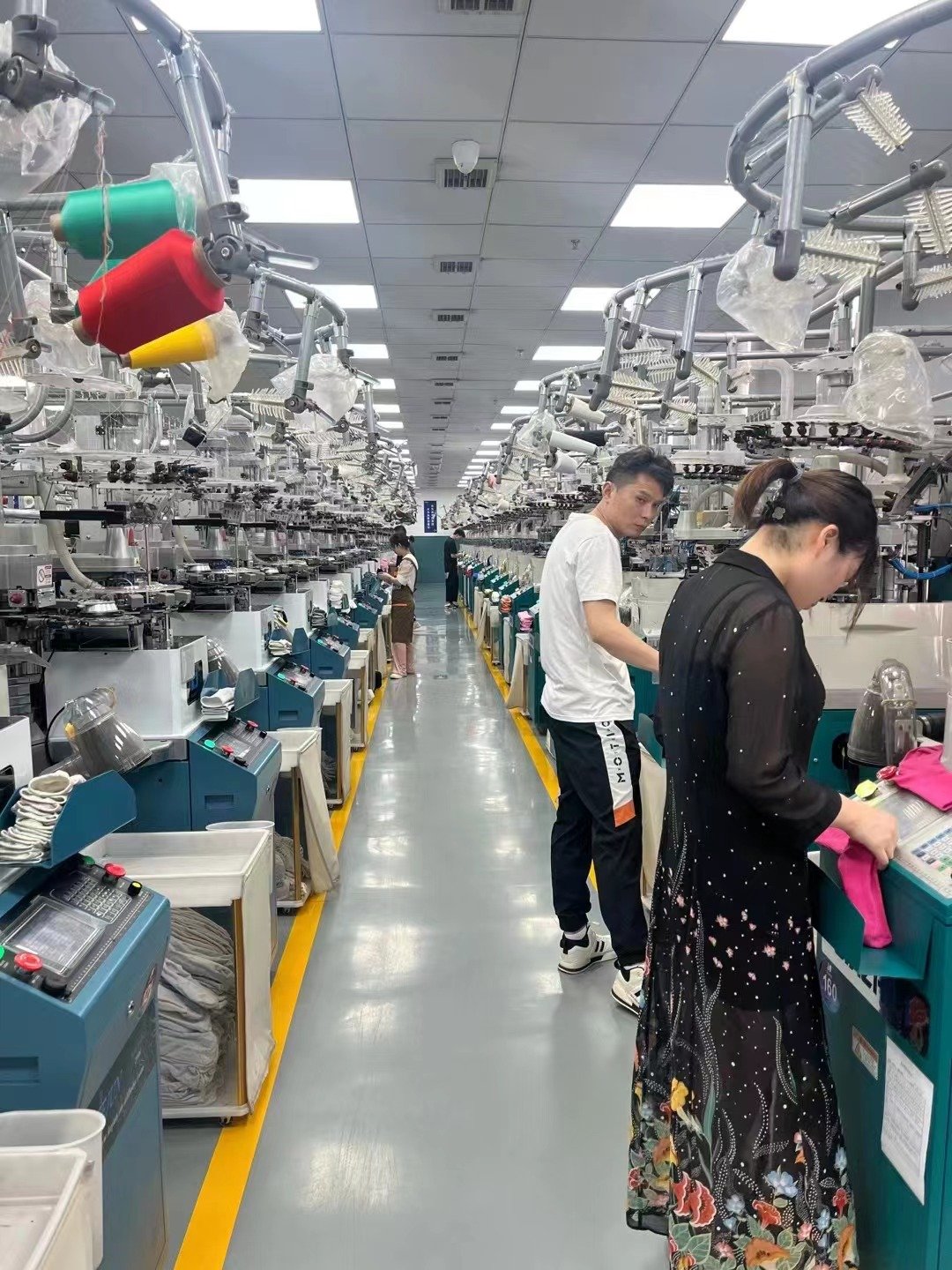
A knitting machine does not start by making socks. It starts by being set up: yarn cones loaded, needles threaded, the pattern digitised and tested, tension dialled in, the first dozen pairs pulled off and thrown away because they are not right yet. That setup is the same whether you then run 100 pairs or 10,000.
So the minimum is not a sales tactic. It is the point at which the setup cost spread across the pairs stops making every sock absurdly expensive. Below a certain quantity, the per-pair price is dominated by setup rather than by yarn and labour — and a serious factory would rather tell you that than quote you a silly number.
What 100 pairs actually looks like
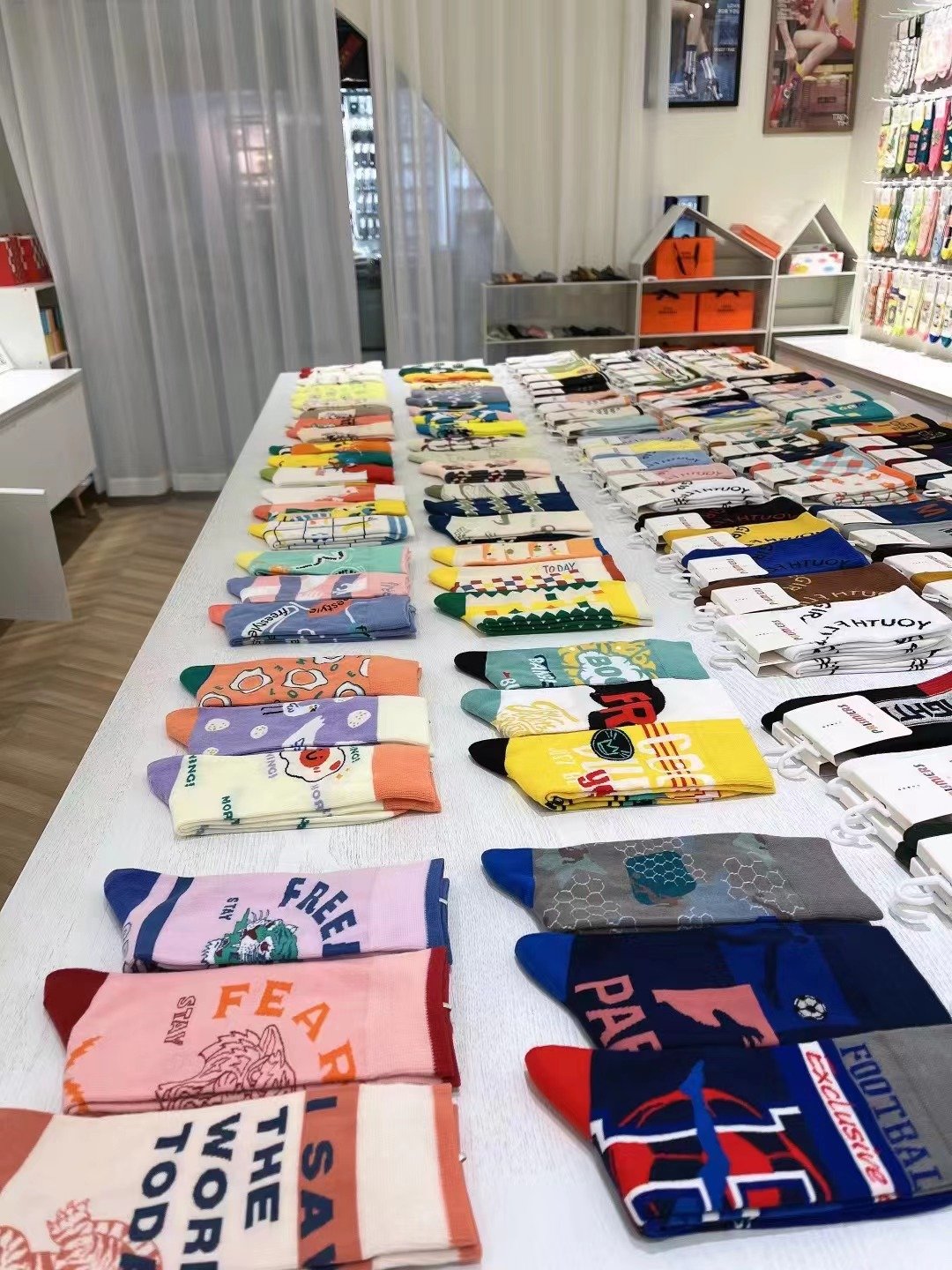
People hear “100 pairs” and picture a warehouse. In reality it is a surprisingly small, very usable quantity:
- A squad of 25 players getting four pairs each. That is a full season’s kit for one team.
- 50 staff receiving two pairs each as an onboarding or holiday gift.
- A studio with 30 regulars plus shelf stock to sell.
- A pilot drop for one retail door to test whether your customers even want socks.
And because sizes can be mixed inside one design at no extra charge, those 100 pairs do not have to be 100 identical mediums. A team order can genuinely cover youth small through adult XL in a single run.
Where 100 pairs is the right call
| Order size | Typical use | What it tells you |
|---|---|---|
| 100 pairs | One team, one staff gift run, one pilot retail drop | Whether the product is any good |
| 300–500 pairs | A club with several squads, a campaign across a few offices | Whether people reorder |
| 1,000+ pairs | Multi-door retail, national campaigns, seasonal programmes | Whether it belongs in your permanent range |
We would rather you run 100, wear them, wash them twenty times and come back for 800 than order 3,000 on faith and discover the cuff is wrong.
The first order playbook
Here is the sequence we recommend to every new buyer, and it is deliberately boring:
- Send artwork and a rough quantity. Vector file if you have one. A photo of a sketch is fine to start a conversation.
- Get a digital mockup. Free, and it catches maybe 80% of problems — wrong shade of navy, logo placed too low on the cuff.
- Approve a physical sample. 5–7 days after artwork sign-off. This is the step people skip and then regret. You cannot judge a knit from a screen.
- Run 100 pairs. Bulk production is 15–25 days depending on quantity.
- Wash-test them properly. Ten washes, tumble dry, then look at the logo and the cuff.
- Reorder with confidence. Your artwork and settings are already on file, so the second run is faster.
Steps 2 and 3 are where most of the value sits, and they cost you a week. That week is cheaper than a thousand wrong socks.
The costs buyers forget to budget for
Unit price is not the whole invoice. On a first order, the line items that surprise people are almost always these:
- Packaging. A plain polybag costs pennies. A printed header card, a kraft box or a custom belly band turns the same sock into a gift — and adds real cost. Worth it for retail and gifting; pointless for team kit. See the packaging options before you decide.
- Freight. 100 pairs is a small carton and air freight is fast but not cheap per kilo. At 1,000 pairs, sea freight changes the maths entirely.
- Duty and import VAT. Your problem, not ours, but budget for it. Rates differ by country and by fibre content.
- Artwork clean-up. If you send a low-res file, someone has to redraw it. Send vectors and this disappears.
Questions worth asking any sock supplier
Whoever you end up buying from, these five questions will tell you more than any brochure:
- Is the minimum per design or per order? (Ours is per design.)
- Can sizes be mixed inside the minimum? (Ours can, free.)
- Do I get a physical sample before bulk, and is it refundable against the order?
- What happens if the sample is wrong — who pays for the redo?
- Is the quoted lead time production only, or does it include shipping?
A supplier who answers all five crisply is usually a supplier worth testing with 100 pairs.
FAQ
Is 100 pairs per colourway or per design?
Per design. If you want the same sock in navy and in black, that is two designs — 100 of each. If you want one design in mixed sizes, that is one.
Can I order fewer than 100 as a sample run?
We will happily make a small physical sample before bulk, but the 100-pair figure is where a production run starts. Ask us about current options if you need something in between — occasionally there is a slot.
How long does the whole thing take, door to door?
Sampling 5–7 days after artwork approval, bulk 15–25 days, then transit on top depending on whether you choose express or sea. Full detail on the FAQ page.
What if I want socks for seven different sports?
Then you are looking at seven designs. Start with the one you need first — most buyers begin with a single programme, then expand. You can see the range across our past work, from running and match-day football to baby knits.
Do you hold stock for reorders?
We keep your pattern file and yarn references on record, so a repeat run does not start from zero. Many customers reorder the same design annually.
Get a number you can actually plan around
Tell us the design, roughly how many you need and when you need them. You will get back a per-pair price, a timeline and a mockup — no obligation, no chasing.
Send your brief here, or start with the custom logo socks page if you are still working out what you want.
Where to go next
- About Soxtastic — why a factory-direct supplier can run 100 pairs
- Custom sock packaging — one of the costs buyers forget to budget
- Sock size chart — how a 100-pair order splits across a size range
- Custom crew socks — the most common starting style for a first order
- Custom sock FAQs — sample costs, reorders and shipping
More from the buyer’s guide
- Jacquard or Embroidery? How to Pick the Right Logo Method for Custom Socks — which logo method suits your artwork — and which one to avoid
- Custom Socks as Corporate Gifts: What Actually Gets Worn — why socks outlive the swag drawer, and how to spec a gift
- How to Write a Sock Spec Sheet Your Factory Can Quote in 24 Hours — the ten spec fields that get you a quote back the same day
- Custom Socks by Type — all seven styles we knit, with construction specs and starting points