There are two kinds of sourcing emails. One gets a price back the same afternoon. The other starts a two-week rally of questions: what yarn, what gauge, what size range, how many colours, what packaging.
The difference is not luck. It is a spec sheet. And the good news is that writing one takes about fifteen minutes if you know which fields matter — most of them you can decide from your desk without any technical background.
Why a vague brief costs you money
When a factory has to guess, it guesses conservatively. That usually means quoting a heavier, more expensive construction than you need, or padding the lead time because nobody knows whether a special yarn has to be sourced. A precise brief removes the padding. In our experience it is worth anywhere from 5 to 15 percent off a first quote, and it consistently shaves days off the back-and-forth.
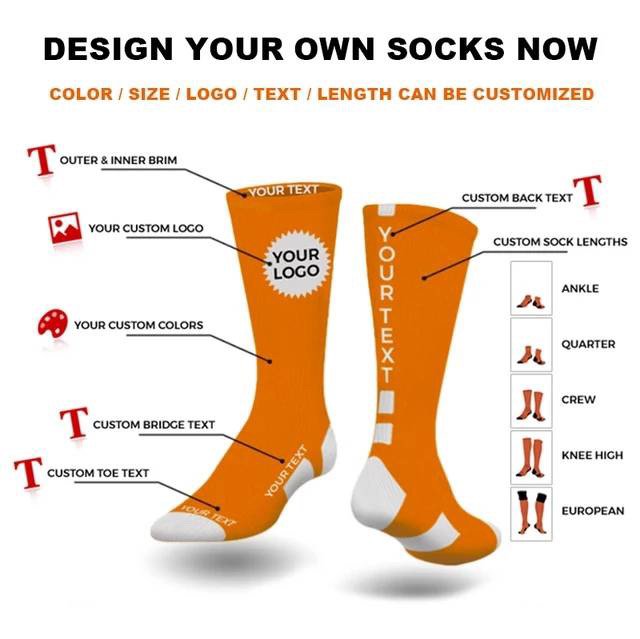
The ten fields that actually matter
Everything else is negotiable later. Get these ten right and you can be quoted properly:
| Field | What to write | Why it moves the price |
|---|---|---|
| Style | Crew, ankle, no-show, knee-high | Yarn consumption and machine time |
| Yarn composition | e.g. 80% combed cotton / 17% nylon / 3% elastane | The single biggest cost driver |
| Gauge / needle count | 144N, 168N, 200N — or “fine dress” / “midweight” | Finer = slower knitting, finer look |
| Cushioning | None, light, full terry footbed | Material and cycle time |
| Size range | E.g. EU 35–38 / 39–42 / 43–46, with split | Affects needle setup and packing |
| Logo method | Jacquard, embroidery, print | Separate operation or not |
| Colour count | Number of yarn colours in the design | Machine feed limits |
| Quantity per design | Plus how many designs | Setup amortisation |
| Packaging | Polybag, header card, box, or none | Second supply chain entirely |
| Deadline and Incoterm | Date, and FOB / EXW / DDP | Determines freight and scheduling |
If you only fill in five of them, fill in style, yarn, quantity, logo method and deadline. Those drive most of the number.
Yarn: the part people hand-wave
“Cotton socks” is not a specification. Here is what actually matters:
- Combed cotton. Standard for dress and everyday socks. Short fibres removed, so it is smoother and pills less than carded cotton.
- Merino wool. Temperature regulation and odour resistance. Costs more, earns it on hiking and winter product.
- Bamboo viscose. Soft hand feel, good moisture handling. Popular in gift and lifestyle ranges.
- Recycled polyester / nylon. Usually blended in for durability and stretch recovery. Increasingly requested for sustainability reporting.
- Elastane percentage. This is the number that decides whether a sock stays up. Under 2% and the cuff gives up; 3–5% is typical.
A useful, honest default for a general-purpose crew: 80% combed cotton, 17% nylon, 3% elastane. It wears well, washes well, and does not surprise anyone on price. Our heavyweight and hiking styles move the wool and cushioning up; performance styles move the synthetics up.
Gauge, cushion and where people over-specify
Needle count (often written 144N, 168N, 200N) is roughly how fine the knit is. Higher number, finer and dressier fabric. A 200N sock is a dress sock; a 144N with a terry footbed is a work or sport sock.
Over-specifying happens constantly here. Buyers ask for the finest gauge and the heaviest cushion in the same sock, which is close to contradictory — fine gauge means less room for a thick footbed. Decide which one matters: look or comfort under load. Then let the other follow.
For reference, the performance running build prioritises moisture transfer and targeted cushioning; the compression build prioritises graduated fit. Neither is trying to be a dress sock.
Colour: Pantone codes are a starting point, not a promise
Give us Pantone (TCX for textiles if you have it). We will match to the nearest available yarn shade and send a physical sample. Two honest caveats:
- Yarn is dyed in batches to a shade card. Expect a close commercial match, not a screen-accurate one.
- The same colour reads differently on cotton, on wool and on polyester. If your socks use two fibres, the panels will not be identical.
Approve the physical sample in daylight. This is not pedantry — it is the step that prevents the most expensive kind of disappointment.
Labelling and compliance
If you are selling rather than giving away, fibre content labelling is regulated, and the rules differ by market:
- EU: textile products need fibre composition stated, in the local language of the member state where they are sold.
- US: the FTC requires fibre content, country of origin and the manufacturer or seller identity on the label.
- UK: similar composition requirements post-transition; check current guidance.
Tell your factory the destination market before production starts. Retrofitting labels to finished goods is miserable and expensive. We handle this routinely, but we need to know at quote stage.
A filled-in example
Here is what a clean first brief looks like. Steal this format:
- Style: crew, mid-calf
- Yarn: 80% combed cotton / 17% nylon / 3% elastane
- Gauge: 168N, light cushion in footbed
- Sizes: EU 39–42 and 43–46, split 40/60
- Logo: jacquard, 3 colours, on the outer cuff
- Quantity: 200 pairs per design, two designs
- Packaging: kraft header card, 1 pair per card
- Market: Germany (EU labelling required)
- Deadline: goods needed 20 November, FOB
That email gets quoted fast. “Hi, we’d like custom socks, please quote” does not.
FAQ
I don’t know the technical details. Can you just recommend?
Yes — that is most of our job. Tell us who wears them, how often, and what they are replacing, and we will propose a build. You approve a sample before anything goes to bulk.
Can I change yarn after the sample?
Yes, but it restarts sampling and can change the price. Better to sample two yarn options up front if you are genuinely undecided.
What about size ranges for kids or babies?
Same ten fields, different ranges. Baby and toddler sizes are their own needle setup — see the baby range for reference constructions.
Where do I find size charts?
There is a sizing guide on the site covering the ranges we produce.
How long from spec to delivered goods?
Sampling 5–7 days after artwork approval, bulk 15–25 days depending on quantity, plus transit.
Send the spec — or send us nothing and we will help you write it
If you already have the details, paste them into the form and we will quote quickly. If you have only an idea and a deadline, that is fine too; we will ask the right questions in one round instead of ten.
Start here: send your brief, or browse past work to see what other buyers have specified before you decide.
Where to go next
- About Soxtastic — who you are actually buying from, and where the factory is
- Sock size chart — the size fields on the spec sheet, mapped to shoe sizes
- Custom sock packaging — bands, boxes and header cards if this order is a gift or retail line
- Custom sock FAQs — shipping, payment and compliance questions
- Custom logo socks — our most-requested style, if you have not settled on one yet
More from the buyer’s guide
- Jacquard or Embroidery? How to Pick the Right Logo Method for Custom Socks — which logo method suits your artwork — and which one to avoid
- Custom Sock MOQs Explained: Why 100 Pairs Is Usually the Right Start — what minimums really mean and how to plan a first order
- Custom Socks as Corporate Gifts: What Actually Gets Worn — why socks outlive the swag drawer, and how to spec a gift
- Custom Socks by Type — all seven styles we knit, with construction specs and starting points