You have the logo. It looks great on screen. Then the factory email lands in your inbox with a question you did not expect: do you want this knitted in or embroidered on?
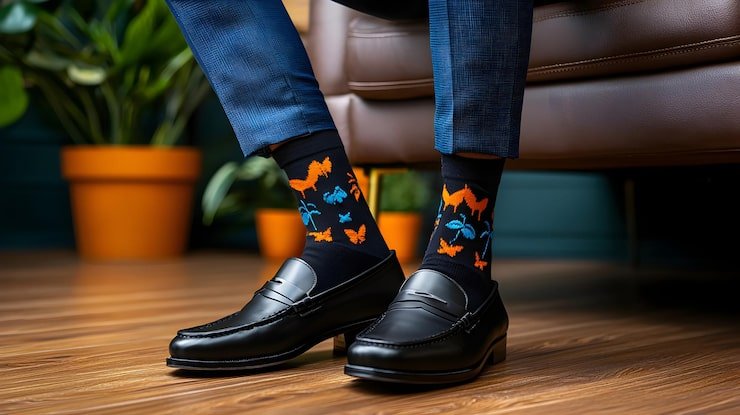
It sounds like a small detail. It isn’t. That one choice decides how the sock feels on the foot, how long the mark survives the wash, how many colours you can actually use, and — bluntly — what you pay per pair. We have watched buyers pick the wrong method and then spend the next six months quietly unhappy with a product that was perfectly well made.
This is the guide we wish every buyer had read before their first order. No jargon, no upselling. Just what each method does, what it costs you, and when to pick it.
The four ways a logo ends up on a sock
Before comparing, it helps to know the menu. In practice there are four production routes for putting a mark on a sock, and they behave very differently.
- Jacquard (knitted in). The logo is made by the knitting machine itself, using different coloured yarns. The design is the fabric, not something added to it.
- Embroidery (stitched on). The sock is knitted plain, then a embroidery head stitches your logo onto the finished cuff or leg.
- Print (heat transfer or sublimation). The artwork is transferred onto the surface of the sock. This is the only route that handles photographic detail.
- Woven label or patch. A small separate label — usually the size of a postage stamp — sewn onto the cuff. Common in retail, less common in promo.
Everything below is about the first three, because that is where the real decision sits for most orders.
Jacquard: when the logo should become the fabric
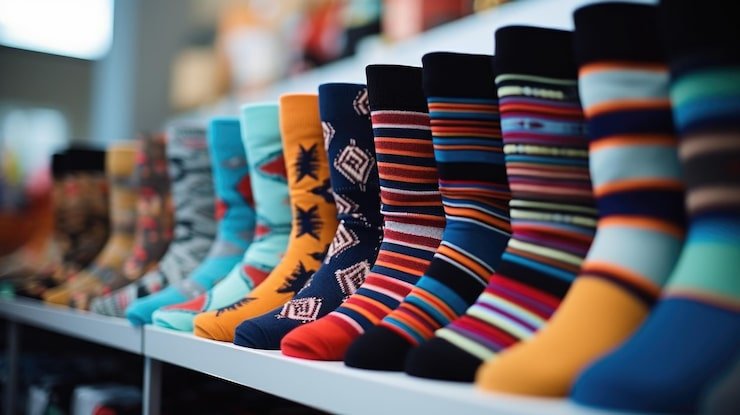
Jacquard is the oldest and, in our view, the most honest way to brand a sock. The machine reads your artwork and knits it directly, so the inside of the sock is as clean as the outside. There is no raised thread, no plastic film, nothing to peel.
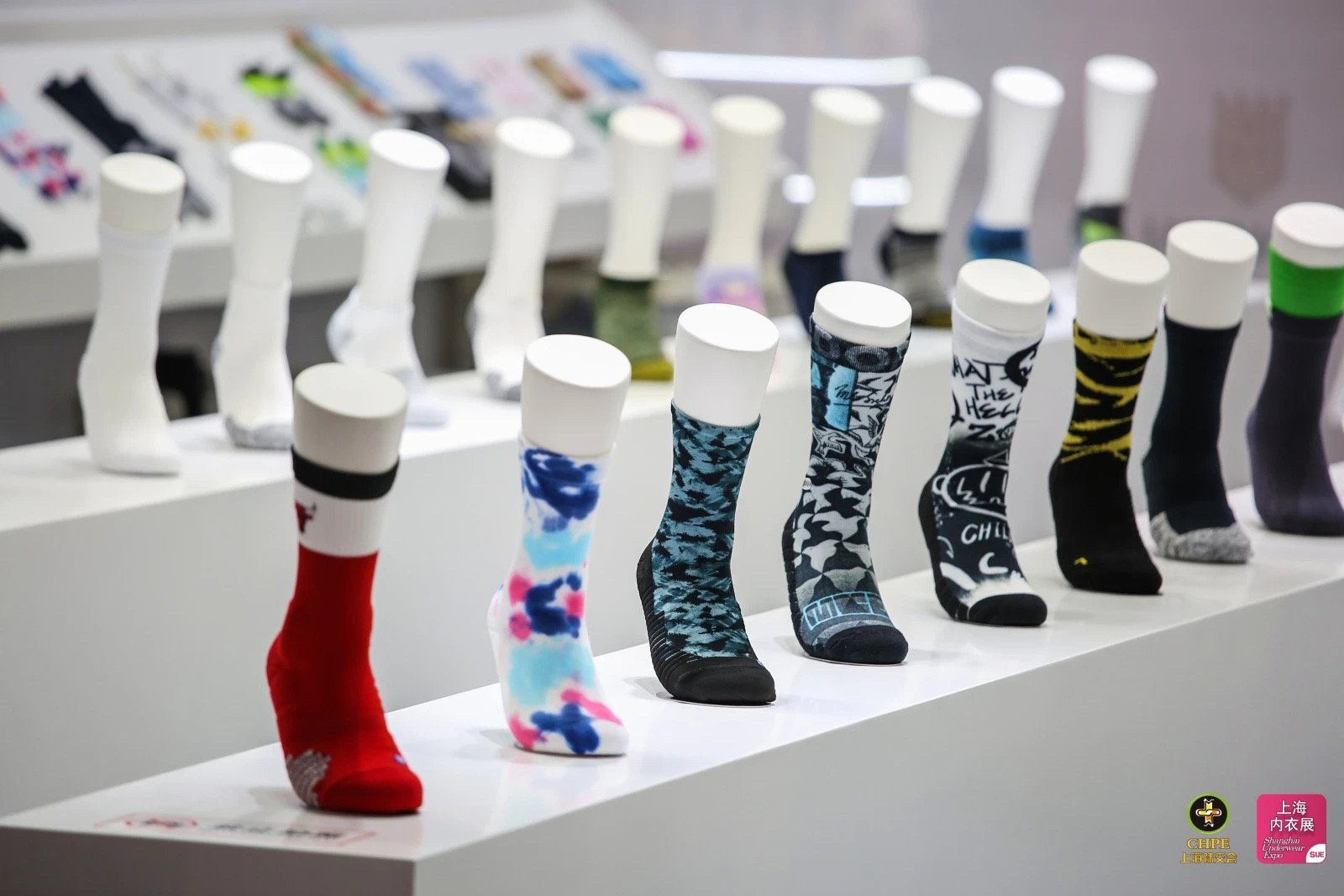
What that means in practice:
- It lasts as long as the sock. Nothing to fray or crack. We have customer socks from years ago still going through the wash with the mark intact.
- It stays breathable. Because there is no extra layer, the knit keeps its stretch and airflow — which matters a lot if these are going on an athlete’s foot.
- Colours are limited. This is the trade-off. A jacquard machine works with a fixed number of yarn feeds per sock, typically up to six colours. Fine detail and gradients do not translate well.
- Designs read best when they are bold. Simple marks, initials, stripes, wordmarks, mascots with clean edges. If your logo has a thin outline or tiny text, jacquard will blur it.
This is the method we recommend for sports teams, workwear, and anything being worn hard. Our elite team soccer socks and most of the performance range are built this way precisely because they get washed twice a week for a season.
Embroidery: when you want the logo to sit on top
Embroidery is stitched onto a finished sock, so the mark has a slight raise you can feel with your thumb. It photographs beautifully, and it is the closest thing to a “premium” finish in this industry.
Where it wins:
- Colour freedom. You are no longer limited by yarn feeds. Thread colours can be swapped mid-run, which opens up detailed artwork that jacquard cannot do.
- Sharper small text. A fine wordmark or a thin keyline holds up better under a needle than under a knit.
- Gift and corporate registers well. There is a reason corporate dress socks tend to be embroidered — the finish reads as considered rather than printed.
Where it costs you:
- The back of the stitch. Embroidery leaves a backing on the inside of the cuff. On a thin dress sock this can be felt. Good factories use soft backing and cover it; ask about it, because cheap backing is the number one complaint we hear about embroidered socks bought elsewhere.
- A little less stretch. A dense stitch area does not stretch with the knit. Keep embroidery off high-flex zones.
- Slightly higher unit cost at low quantities, since it is a second operation after knitting.
Our embroidered sock range uses soft backing as standard for exactly this reason.
Print: when your artwork is a photograph
Print is the wildcard. It handles gradients, shading, and full-colour artwork that neither knitting nor thread can reproduce.
Use it when your design genuinely needs it — an illustrated mascot, a photo-real image, a campaign visual. Be aware of the cost:
- Colour fastness is good with modern sublimation but not identical to yarn that is dyed before knitting.
- Very stretchy areas can crack the film over time if the artwork is dense.
- It is the fastest to sample, which makes it popular for short-run event merchandise.
For anything being worn repeatedly and washed hard, we would still steer you to jacquard. For a one-off launch, a print run is often the smarter, cheaper call.
What each method does to cost, MOQ and lead time
| Method | Best for | Colour limit | Feel | Wash durability |
|---|---|---|---|---|
| Jacquard | Sports, workwear, anything worn hard | Up to ~6 yarn colours | Flat, seamless, breathable | Excellent — part of the fabric |
| Embroidery | Corporate, gifting, dress | Wide thread range | Raised, premium | Very good with soft backing |
| Gradients, photos, short campaigns | Full colour | Smooth surface film | Good; avoid dense fills on high-stretch zones | |
| Woven label | Retail branding | Limited by label size | Small sewn patch | Excellent |
Across all four, our minimum is 100 pairs per design, and sizes can be mixed inside that 100 at no extra charge. Sampling runs 5–7 days after artwork sign-off, bulk production 15–25 days depending on quantity. Those numbers are the same whether you knit, stitch or print — the method changes the unit price, not the calendar.
Five questions we ask before recommending a method
- Who is wearing these, and how often? Daily wear or sport pushes you to jacquard. A once-a-year gift can be embroidery.
- How many colours are in the logo? Send the original vector if you have one. A six-colour logo is a jacquard problem; a twelve-colour one is not.
- Where does the logo sit? Cuff and leg are safe everywhere. The sole and the heel flex too much for embroidery.
- What is the sock made of? Thin dress knits show embroidery backing more than a cushioned crew does.
- What is the deadline? If you have three weeks, we will tell you honestly which methods fit.
Artwork mistakes that cost you a week
Three things slow down more first orders than anything else:
- Sending a screenshot instead of a vector. A PNG at 72dpi cannot be knitted or stitched cleanly. Send AI, EPS, SVG or a high-resolution PDF.
- Tiny text. Below roughly 4mm, lettering turns to mush on a knit. We will tell you when your tagline needs to move to the packaging instead.
- Assuming the screen colour matches the yarn. Yarn is dyed to a shade card, not a hex code. Expect a close match, not a pixel-perfect one, and approve the physical sample before bulk.
FAQ
Can I mix methods in one order?
Yes, but each variation counts as its own design against the 100-pair minimum. Two colourways of the same sock is one design if the logo method is identical.
Which method is cheapest?
Jacquard is usually the most cost-effective at volume, because the logo is produced in the same pass as the sock. Embroidery adds a second operation. Print sits in between and depends heavily on coverage area.
Can I see a sample before committing?
Always. We send a physical sample — or a detailed digital mockup first if you are on a tight clock — before anything goes to bulk. See the full FAQ for how the approval step works.
What about grip socks and yoga styles?
Same rules, one extra consideration: grip dots go on the sole, so the logo goes on the cuff or the ankle. Our non-slip yoga socks are knitted jacquard for exactly that reason.
Not sure which one yours needs?
Send us the artwork and a rough quantity and we will tell you straight which method suits it — including when the honest answer is “not this one.” That costs nothing and takes about a day.
Start here: custom logo socks, or send your brief and we will come back with a recommendation, a mockup and a price.
Where to go next
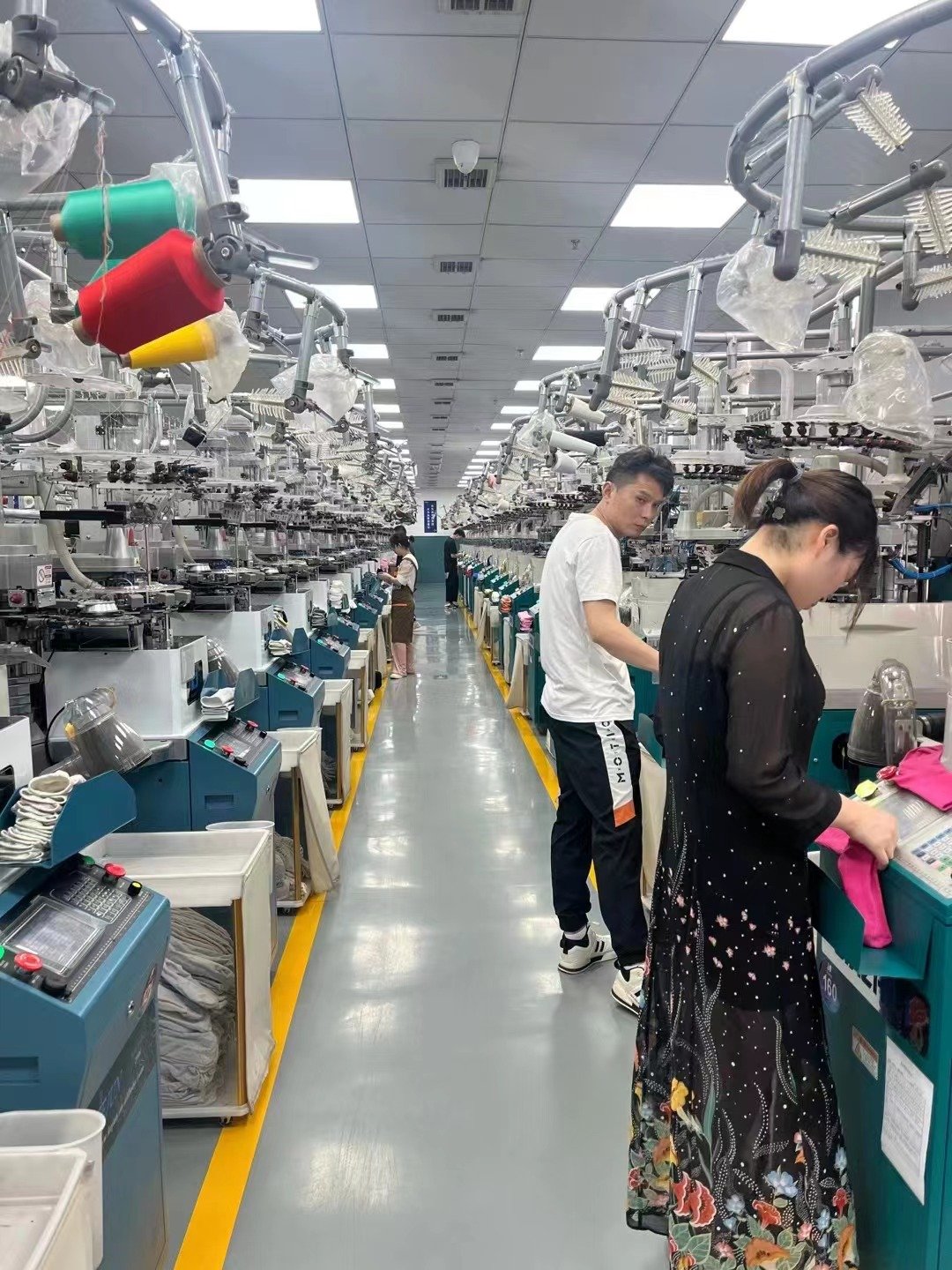
- About Soxtastic — the machines and the factory behind each method
- Custom logo socks — see each method applied to a full product range
- Sock spec sheet template — send the artwork decision alongside the rest of the spec
- Custom printed socks — the third method, if your artwork is photographic
- Custom sock FAQs — artwork file formats and sample turnaround
More from the buyer’s guide
- Custom Sock MOQs Explained: Why 100 Pairs Is Usually the Right Start — what minimums really mean and how to plan a first order
- Custom Socks as Corporate Gifts: What Actually Gets Worn — why socks outlive the swag drawer, and how to spec a gift
- How to Write a Sock Spec Sheet Your Factory Can Quote in 24 Hours — the ten spec fields that get you a quote back the same day
- Custom Socks by Type — all seven styles we knit, with construction specs and starting points